
Finding Her Way Back: A Story of Quiet Resilience
Marianne's recovery from a running injury was mental, social AND physical.
Amy Klutho | 06/26/2026
Members of the Chattanooga Track Club represent a diverse array of runners – many speeds, many ages, and some recovering from illness or injury. Over the past few years I have observed incredible resilience in some who seem unphased but others who have really struggled to return with the same discipline or joy. I was curious about how the mental aspect of injury or illness plays into recovery, so I recently sat down with Dr. Leah Washington, Associate Professor of Health & Human Sciences at Bridgewater College, to pick her brain. Dr. Washington is a PhdD in Athletic Psychology and focuses on rehab with her athletes. Below is a story almost any runner who has been injured might relate to, as Marianne’s recovery involves not only her biological recovery but also her psychological, and social framework
Finding Her Way Back: A Story of Quiet Resilience
Marianne had always been the one in motion.
Mornings for Marianne used to begin before the sun rose, with a brisk run with friends, a routine that felt less like exercise and more like a declaration: this is who I am. Friends described Marianne as disciplined, energetic, the kind of person who didn’t hesitate—she simply did.
Then came the injury.
It happened on an ordinary day, the kind you never think will divide your life into “before” and “after.” A misstep, a sharp pain, and suddenly Marianne’s world narrowed—from open sidewalks and long strides to physical therapy appointments and cautious, measured movements. Healing, she quickly discovered, was not just physical.
In the weeks that followed, Marianne felt something unfamiliar settle in: stillness. Not the peaceful kind, but a heavy, frustrating quiet. She found herself staring at running shoes she no longer laced up. The routines that once defined her disappeared, and with them, a piece of her identity.
“I don’t recognize myself,” she admitted to a friend. And beneath that was a more painful thought: What if I never get back to who I was?
The Weight of “Not Yet”
Recovery, Marianne learned, wasn’t a straight line.
Some days she felt determined, carefully completing her exercises, checking off small milestones. Other days, she avoided them entirely, overwhelmed by the gap between where she was and where she wanted to be. Her inner voice grew louder—and harsher.
- I’m too slow now.
- I’ll never be as strong as before.
- What’s the point?
This quiet mental chatter became one of the biggest barriers to her progress. It wasn’t just about the injury anymore—it was about fear, doubt, and the loss of confidence.
Experts often describe recovery as more than physical—it’s biological, psychological, and social. Marianne was experiencing all three. Her body was healing, but her confidence lagged behind. And the social routines that once supported her—running groups, casual conversations, shared goals—had slipped away.
A Shift in Perspective
The turning point didn’t come all at once. It rarely does. It began with a question her physical therapist asked: “What did you love about being active?”
Marianne paused. Not what she did, but what it gave her.
“Being outside,” she said slowly. “Feeling capable. Accomplishing something. Just… joy.”
That small reflection planted a new idea: maybe the goal wasn’t to return to exactly who she was—but to reconnect with what mattered most.
Small Steps, Real Progress
Marianne began to approach recovery differently—not as a race backward, but as a series of forward steps.
- She adjusted her self-talk. When the thought “I’m not as fast” surfaced, she practiced replacing it with “I’m moving again.” It felt awkward at first, but over time, it softened the frustration. When the thought “I’m not as fast” surfaced, she practiced replacing it with “I’m moving again.” It felt awkward at first, but over time, it softened the frustration.
- She set attainable goals. Instead of comparing herself to the past, she focused on the present: a five-minute jog, then ten, then fifteen. Each step became its own victory.
- She rebuilt her environment. Without her old running group, she found new forms of connection—a neighbor willing to stroll at a slower pace, a community class designed for rehabilitation. Support didn’t have to look the same to be meaningful.
- She accepted beginner status. One of the hardest shifts was allowing herself to be “new” again. To move cautiously. To not be the strongest in the room or on the road. In that humility, she found unexpected freedom.
- She redefined success. Success was no longer distance or speed; it was consistency, effort, and showing up—even on difficult days.
Learning to Trust Again
Fear of reinjury lingered. Every unfamiliar ache sparked doubt. Every uneven step triggered caution. But Marianne began to rebuild trust—not by ignoring fear, but by working alongside it. She followed her rehabilitation plan, listened to her body, and reminded herself that progress required patience.
“Your body knows how to heal,” her therapist told her. “You just have to give it the chance.” Slowly, Marianne began to believe that.
A Different Kind of Strength
Months later, Marianne still wasn’t the same person she had been before the injury—and that realization no longer felt like a loss. She still ran, though at a different pace. She still moved, though with more intention. But something had changed for the better: she had learned resilience in a deeper, quieter way.
She understood now that motivation doesn’t always arrive as a burst of energy. Sometimes it shows up as a decision—to try again, to take one more step, to silence a discouraging thought and replace it with something kinder.
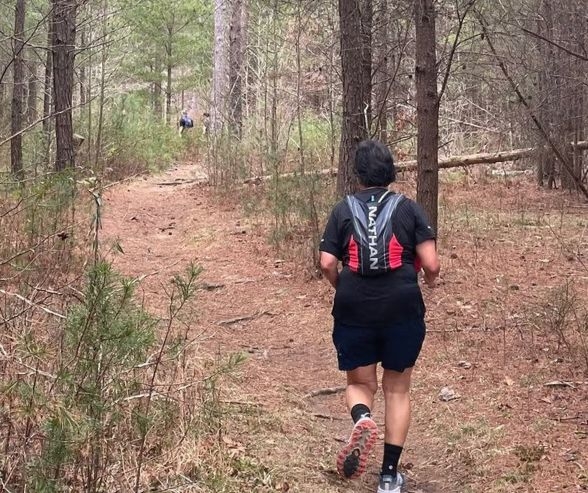
On a recent morning, Marianne stepped outside just as the sun began to rise. She paused, breathing in the familiar cool air, and started running. Not fast. Not far. But forward.
Moving Forward: Lessons from Marianne’s Journey
Recovery includes a biological component – brain chemistry, genetic predisposition to recover faster – psychological component – your thoughts and beliefs about yourself, thoughts about your injury, whether you are optimistic and resilient or prone to stress and anxiety or avoidance – and your social support – whether you have the social support you need. Recovery may be faster when all three components are aligned.
Marianne’s story offers a roadmap for anyone struggling with motivation after injury:
• Start with values, not performance. Focus on what activity brings to life—joy, connection, purpose. • Challenge unhelpful thoughts. The inner voice matters; reshape it with patience. • Set realistic, flexible goals. Progress grows from consistency, not perfection.
• Lean on support systems. Even small connections can reduce isolation and build momentum. • Accept change. Recovery may not restore the past—but it can create a meaningful future.
Marianne didn’t simply return to movement—she redefined it. And in doing so, she found something even more enduring than motivation: the willingness to begin again.